WELDING MANAGER
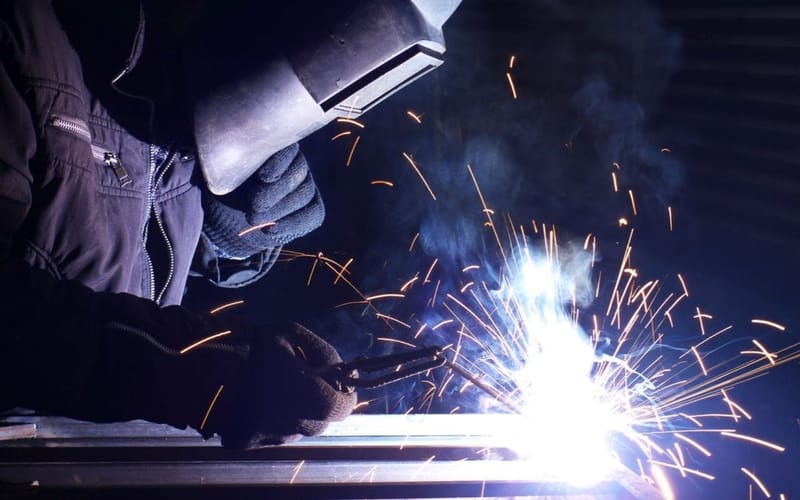
The Annex B of UNI EN 1090-1 and § 7 of part -2 or -3 of EN 1090 specifies how to demonstrate the conformity of the welding process, which is one of the operations that can influence, modify and/or determine the performance characteristics of structural components to be declared. Such conformity is achieved, among other things, through the qualification of welding procedures and welders.
The qualification of welding procedures is carried out in accordance with ISO 15614-1. The achievement of qualification is obtained by analyzing a welded test sample using the parameters reported in the WPS (Welding Procedure Specification), according to the requirements set out in the standard itself, and by checking through tests on the material that the metallographic, metallurgical and physical-mechanical characteristics of the weld are comparable to the original materials. A WPQR (Welding Procedure Qualification Record) is a welding procedure qualification that aims to validate one or more WPS; it is a document of fundamental importance for the company, mandatory according to Italian Ministerial Decree 17/01/2018 “Technical Standards for Construction”, and its validity is unlimited in time.The regulations also require professional operators to hold a qualification, commonly referred to as a “certificate”. ISO 9606 specifies the skills required of a fusion welding operator for steels and provides a set of technical rules for a systematic qualification test of the welder, in order to demonstrate that the personnel who have undergone such qualification are able to fuse two edges and filler material without significant operational defects. The welding processes referred to in the standard are manual and semi-automatic fusion processes.
The welder’s ability to follow verbal or written instructions and the assessment of individual skill are important factors in ensuring the quality of the finished product.
The qualification of the welder is based on the identification of essential variables, each of which defines a range of validity and concerns:
- Welding process;
- Type of product;
- Type of welded joint;
- Filler metal group;
- Type of filler metal;
- Dimensions (thickness and diameter);
- Welding position;
- Welding details.
The regulatory complexity related to welder qualification requires a careful and precise preliminary analysis of the activities to be qualified in terms of welding process, type of material, thicknesses and diameters, positions, etc.
Why get certified
Welding processes are critical processes in the construction sector; the strong importance of the human component and the often crucial role that welded fabrication plays in the structure have led the legislator to require companies to obtain a series of certifications in order to validate processes and ensure the quality of the welded product.
The harmonized European standard UNI EN 1090 requires:
- welder certification according to ISO 9606;
- welding process certification according to ISO 15614;
- the appointment of a Welding Coordinator, with the necessary training according to ISO 14731;
- the ability to operate welding processes according to the quality requirements set out in ISO 3834.
Target users
Certification represents a fundamental requirement to attest the qualification of welding procedures and welders. It is intended for operators already in possession of experience in methods and basic operational skills in welding processes, interested in obtaining professional qualification, and in particular for: permanent joint workers, maintenance technicians, operators and users of technical gases, plumbers, locksmiths, pipefitters, refrigeration technicians, plant managers, Quality/Safety service managers.
Advantages
The qualification of the welding process as a whole ensures the application of a controlled process and offers clear advantages both to clients who use the welding service and to the manufacturer who, with defined parameters and variables, reduces the possibility of defects.
The specific qualification of personnel offers numerous advantages:
- For the Manufacturer: having competent and qualified personnel for welding activities is today an important calling card.
- For the Operator: qualification is a competence that enriches the CV of every technician, including self-employed professionals, whose professionalism and continuous training are recognized, increasing opportunities for assignments requiring such certification.
Certification process
The qualification of welding procedures, as well as welder qualification, is carried out through the execution of a test specimen of geometry defined according to standards in the presence of a professional qualified by the Certification Body.
The test specimen can be carried out directly at the client’s company, always under the supervision of our personnel. Once completed, the specimen is sent to the laboratory for testing: if all tests are successful, the qualification certificate is issued.
Welder qualification is valid from the date the joint is executed, provided that the required tests are acceptable. The certificate must subsequently be confirmed every 6 months by the employer. The methods for revalidation of the qualification are specified in the standard and generally the welder is reassessed every 3 years.
Normative references
- ISO 9606 – Qualification tests for welders – Fusion welding – Part 1: Steels
- ISO 15614 – “Specification and qualification of welding procedures for metallic materials – Welding procedure test – Part 1: Arc and gas welding of steels and arc welding of nickel and nickel alloys”.